Praxis: A Writing Center Journal • Vol. 23, No. 4 (2026)
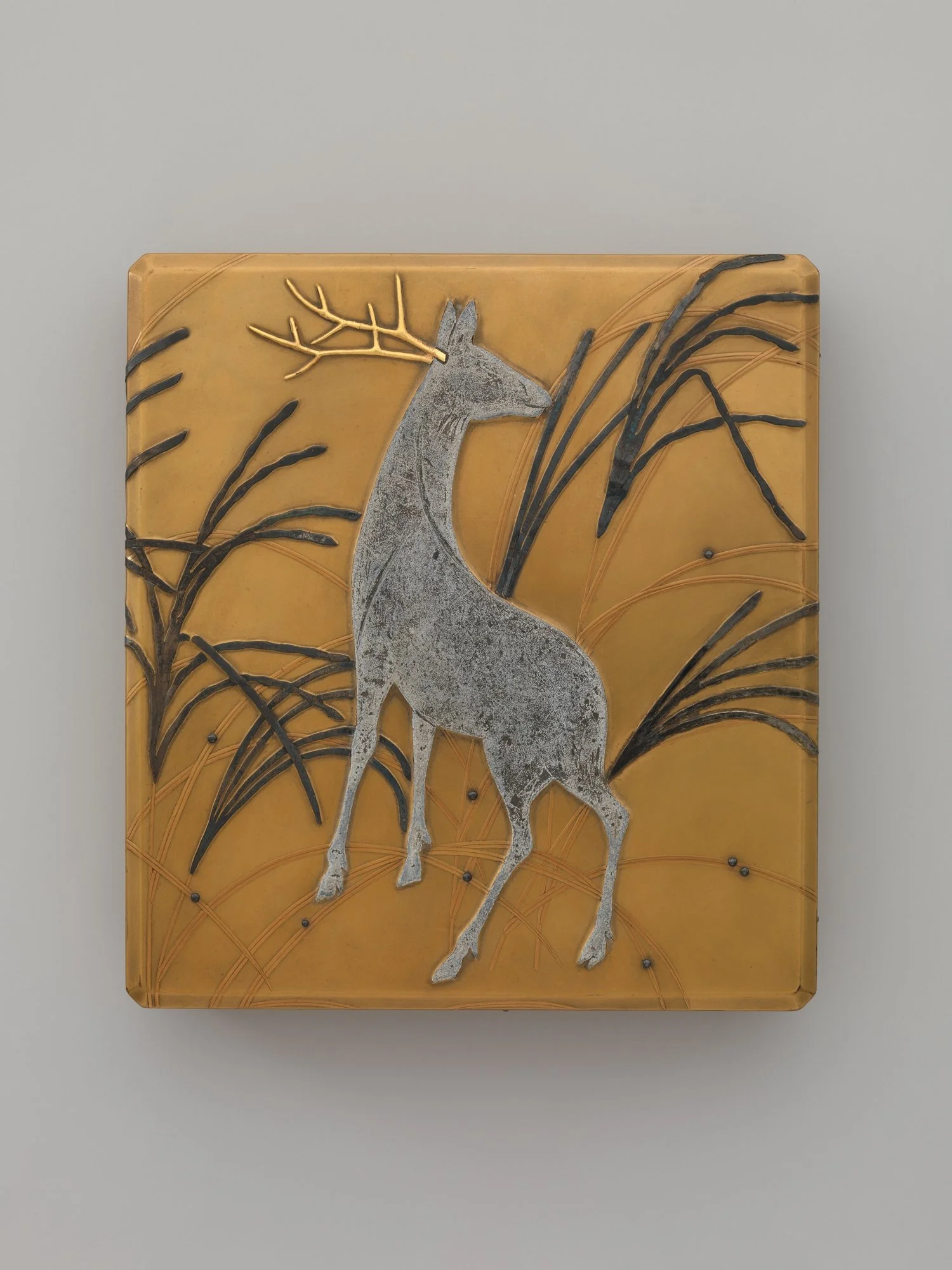
The cover of the Summer 2026 issue of Praxis features a portable writing box made in eighteenth-century Japan, which served as a container for calligraphy tools. Writing Box (Suzuri-bako), formerly attributed to Ogata Kōrin, 18th century, lacquer with pewter and gold, The Metropolitan Museum of Art, New York.
Editors’ Letter
Mary Fons, Sam Turner, Jake Garner
The University of Texas at Austin
praxisuwc@gmail.com
An Interview with Sam Turner, Outgoing Praxis Co-Editor
Welcome to the long-awaited Summer 2026 issue of Praxis and to a fresh academic year.
Before we do anything else, the editors would like to thank the Praxis review board. We cannot make the journal without your counsel and appreciate the time you find, miraculously, to support us. To the scholars published in this issue: aside from being smart, every one of you showed the patience of Job as this issue inched toward publication over the course of the summer. Thank you.
In lieu of our regular editors’ introduction, we present a brief “exit interview” with outgoing Praxis co-editor, Sam Turner. Sam Turner is a PhD candidate (ABD) in the Department of Rhetoric & Writing at the University of Texas at Austin. This summer, Sam finished up her second year at Praxis (the editorship is a two-year term) and is off to do further wonderful things. Co-editor Mary Fons interviewed Sam about her time at Praxis. They were very serious and academic about it.*
MF: Sam! Thanks for sitting for this interview. Okay, so, long before you became editor of Praxis—even before you had plans to come to UT, if I remember correctly—you were a devoted reader. Tell me when your relationship with Praxis began.
ST: Yes! I think the first time I encountered Praxis was in 2016 as an undergraduate tutor at the Ohio State University Writing Center. Dr. Beverly Moss taught my tutor training course, and then I worked at the WC under Dr. Genie Giaimo’s directorship. Genie was intentional and diligent about designing ongoing, center-wide training, and being in touch with current scholarship in writing center studies was a big part of that. I remember reading Praxis and feeling so in awe of what folks were doing in their writing centers… I really did (and still do) think of Praxis as this fount of wisdom.
MF: I love that.
ST: I think by the time I found the writing center at OSU I had already changed my major six times, but I had this newfound sense of belonging at the WC that was compounded by reading Praxis and finding out that adults talk to each other about the cool stuff they do in their centers across the country. It felt like a whole new world opened up before me. When I got to UT for the doctoral program and learned the job was not only housed in my department but they let grad students do it I was so excited. Praxis for me is both nostalgic and anticipatory of what I can do in the field.
MF: You defended your prospectus this summer and I hear it went super well. Do you think your experience as an editor has in any way had an impact on how you approach and/or execute other academic projects?
ST: Definitely. While I’ve worked in writing centers as a tutor, researcher, and administrator for 10 years (WOW, that’s the first time I’ve ever said that aloud!) I have learned so much about writing and publication processes as an editor. Working with our authors and review board has been such an education for me; I obviously got up-close and personal with what academic publishing cycles can look like—
MF: They’re slow. So slow, Sam.
ST: (laughing) Yes! And I was also able to essentially study how a piece of writing can change over time as scholars refine their ideas and their voices through feedback and revision processes. I’m leaving the editor gig with a clearer sense of my own values as a writer, learner, teacher, and community member, and a lot of that has to do with the trust and patience our readers, reviewers, and authors grant us as editors.
MF: In your view, what do writing centers do that make them indispensable? How about in the particular case of UT Austin?
ST: I’m not sure I have anything different or better to say than what the field already knows to be true about itself… but human writing matters and human writers matter, and being in community with people who believe that is so heartening. I am endlessly impressed by the (often thankless) work that writing centers do at all kinds of institutions. Considering the size of UT’s student body, I think the UWC is especially important for connecting with students and offering meaningful one-on-one support that they might not be getting anywhere else.
MF: I’ve got a fun scenario for you. You get home tomorrow and there’s a check waiting for you from an anonymous writing-center-research-benefactor-person. The benefactor is giving you a bunch of money to be able to focus on a paper in the field of writing center studies. You have enough money to live (well) for a year. What’s the paper?
ST: Oh, this is a fun scenario. There are so many options! I would definitely be interested in hearing from tutors’ about their experiences and perceptions of their jobs, so methodologically speaking, I’d love to conduct interviews, observe some consultations, and analyze documents tutors create in their sessions (notes, outlines, etc.). Something I’d love to know more about is how neurodivergent tutors leverage their strengths to navigate challenges in the writing center, and how those tutors might support creative uptake of writing center pedagogy in their sessions. If the mysterious benefactor was cool with moving the study off UT’s campus, I would love to design a program that follows up on Julie Wilson’s “Advocates for Education in Prison-Based Writing Centers” (2023, in Praxis 20.2). I teach first-year composition to incarcerated students at a local(ish) women’s prison and I know our students there would love the support that writing centers can offer.
MF: What advice do you have for Jake? And what advice do you have for me?
ST: Oh, gosh… For both of you (and for me, too): stay on top of your calendar and keep your planners up to date! As you well know, balancing the concurrent review and publication cycles can be tricky on top of the work we’re doing in our own programs. For Jake, take the time to read the earliest issues of Praxis; it’s a great way to get to know the ethos of the journal from the founding editors and to better understand the energy and mission that Praxis readers have come to know. And, for Mary, keep doing what you’re doing–your creativity, sense of humor, kindness, and verve make academic spaces more humane.
MF: Thank you, Sam.
ST: Thank YOU, Mary Fons! We’ve had such fun together.
*Sam and Mary were introduced through this editorship and have become great friends. We will miss Sam terribly, but heartily welcome incoming Praxis co-editor Jake Garner, who will work alongside Mary this year!